Things to Do in Libreville in October
October weather, activities, events & insider tips
Low Season · Budget Friendly
October Weather in Libreville
Long-run averages for October
82°F (28°C)
High Temp
74°F (23°C)
Low Temp
16.8 inches (427 mm)
Rainfall
87%
Humidity
13
Sunny-Day UV
⚠ October brings 427 mm (16.8 inches) of rain, making it Libreville's second-wettest month after November. Downpours hit hard and fast. Streets flood within minutes. Unpaved roads, including the approach to Cap Esterias and outlying neighborhoods, turn treacherous. Four-wheel drive becomes essential.
⚠ Malaria risk spikes in October. Standing water breeds mosquitoes across the city. Prophylaxis, DEET repellent, and treated bed nets are mandatory here. Do not treat them as optional.
⚠ Waters turn rough fast. Estuary and open-ocean conditions shift without warning. Travelers occasionally get stranded at Pointe Denis. Pirogue excursions to Akanda National Park face cancellations. Confirm return boat schedules before leaving Libreville's waterfront. Always.
Is October Right for You?
Weigh the advantages and considerations before booking
Advantages
- + October kicks off leatherback sea turtle nesting season at Pongara National Park, just 15 minutes by boat across the Komo estuary from Libreville. Watching a 400 kg (880 lb) leatherback drag herself onto the sand beneath a moonlit Atlantic sky ranks among Central Africa's finest wildlife experiences. The season runs through March. Early October visitors often have the beaches to themselves before conservation tour groups arrive later in the year.
- + Migratory shorebirds pour into Akanda National Park's mangrove mudflats along the East Atlantic Flyway during October. The tidal flats north of Libreville become one of West-Central Africa's most significant wintering stopovers. Pink-backed pelicans, African spoonbills, and dozens of heron species arrive in waves. Wetter conditions push wildlife closer to accessible waterways.
- + Libreville's already modest tourist numbers dwindle further in October, so accommodation rates fall noticeably from dry-season peaks. Rooms needing weeks of advance booking in July and August often have same-week availability now. Waterfront boulevard restaurants seat you without a wait.
- + The rains recharge the equatorial forest canopy until the city practically glows green. At Arboretum de Sibang, century-old teak and limba trees drip with moisture, epiphytes bloom on every trunk, and undergrowth thickens so densely that walking beneath the canopy feels less like a park visit and more like entering a living greenhouse. For photographers, saturated greens and dramatic cloud light yield images the dry season cannot replicate.
Considerations
- − October dumps 427 mm (16.8 inches) of rain on Libreville, making it the second-wettest month after November. Storms hit fast and heavy, often as mid-afternoon downpours that transform unpaved roads into red laterite mud. The track to Cap Esterias becomes difficult without four-wheel drive. Even paved streets in Quartier Louis pool ankle-deep during the worst cloudbursts.
- − The pairing of 87% humidity and 28°C (82°F) heat creates a thick, clinging warmth that never fully dissipates, even after dark. Air conditioning is not standard outside higher-end accommodation, and sleeping without it means waking damp. Mosquito activity surges with standing water. Malaria is endemic throughout Gabon, so prophylaxis and repellent are essential.
- − Rough seas on the Komo estuary and open Atlantic can cancel or delay boat crossings to Pointe Denis and pirogue excursions into Akanda National Park without warning. Build in at least one backup day if your itinerary depends on a water crossing. October swells occasionally halt small-boat traffic for 24 hours straight.
Best Activities in October
Top things to do during your visit
Pongara National Park Leatherback Turtle Watching
October opens the nesting window at Pongara National Park, where the Atlantic shoreline extends roughly 35 km (22 miles) along a protected sand coast just across the estuary from Libreville. Female leatherbacks, the largest living reptiles in the sea, haul themselves above the tideline after dark to dig nests in warm sand. Crouching on a dark beach while a creature the size of a small car labors a metre away is humbling. The air carries salt spray and wet sand. The surf hisses against the shore. Your guide's red-filtered torch barely pierces the equatorial blackness. October sightings are less certain than December or January, when nesting peaks. But the trade-off is near-total solitude on the beach. Book through licensed conservation-affiliated operators who coordinate with Gabon's national parks authority, ANPN. Expect a late-evening departure with return well after midnight. Night estuary crossings in the rain require a boat operator you trust, so ask your accommodation for a referral rather than arranging independently at the waterfront. See current guided options in the booking section below.
Booking Tip: Reserve at least two weeks ahead, as licensed turtle-watching operators coordinate with ANPN for beach access permits. Verify that the operator uses red-filtered lights and follows the park's no-flash, no-vehicle-on-beach protocol. Crossings leave from Libreville's waterfront after dark, typically between 8 and 9 PM, returning around 2 AM. A backup night is prudent given October weather.
Akanda National Park Mangrove and Birdwatching Excursions
Akanda National Park spreads across roughly 540 square kilometres (208 square miles) of tidal mangrove, mudflat, and estuary north of Libreville, where Mondah and Corisco bays open to the Gulf of Guinea. October brings the first major waves of Palearctic migrants along the East Atlantic Flyway, and the park's shallow mudflats fill with waders, terns, and shorebirds that have flown since Scandinavia. You reach the interior by pirogue, the narrow wooden canoes Gabonese fishermen pole through mangrove channels. The soundscape alone justifies the trip: the hollow knock of paddle against gunwale, water dripping from hanging aerial roots, the eerie whistle of African fish eagles overhead. Humidity wraps everything in warm haze, and water reflects green canopy above and grey-brown mud below. Pack binoculars rated for low light, since October cloud cover diffuses the glare that would otherwise make midday birdwatching on open mudflats impossible. Access permits come from the ANPN office in Libreville, and pirogues depart from Ambone or Cap Esterias. Current guided options appear in the booking widget below.
Booking Tip: Secure your ANPN entry permit from their Libreville office before heading north, as pirogue operators at Cap Esterias and Ambone may not arrange it for you. Morning departures between 6 and 7 AM catch peak bird activity on the mudflats before tidal flooding pushes species inland. Bring waterproof bags for all electronics. Expect to sit low in a pirogue for two to four hours.
Pointe Denis Beach Day Trips
Pointe Denis sits on a sandy spit across the Komo estuary from Libreville. On a calm morning, the 15-minute motorboat ride carries you from the diesel-and-concrete hum of the capital to a strip of Atlantic sand backed by coconut palms and low scrub forest. The beach runs for several kilometres. In October you will likely share it with a handful of other visitors and the occasional fisherman dragging a pirogue above the tideline. The sand is coarse and golden. The water is warm enough that you wade in without bracing. The horizon is nothing but open Gulf of Guinea. The trade-off with October is real. Afternoon squalls can roll in fast, turning the estuary choppy and delaying return crossings. Plan to go early. Come back by early afternoon. Rip currents are possible along the open Atlantic side of the point. There are no lifeguards. Swim in the calmer estuary-facing water. Quad and buggy operators run along the point. Vehicle traffic on the beach has been linked to damage to leatherback turtle nests. Choose operators who stay on designated tracks.
Booking Tip: Boats depart from Libreville's waterfront area in the morning. Confirm return schedules before you cross. There is no fixed public timetable. Late-afternoon weather can strand you. Bring your own food and water. Options on the point are limited. Book a round-trip transfer through your accommodation or a licensed boat operator. Do not negotiate solo at the dock. See current tour packages in the booking section below.
Mont-Bouet Market and Gabonese Street Food Walks
Marche Mont-Bouet is Libreville's gravitational center for food and commerce. It is a dense, loud, covered-and-uncovered sprawl where the smell of wood-smoked fish hits you from a full block away. Vendors stack towers of plantains, cassava roots the length of your forearm, and pyramids of dark red palm nuts beside buckets of live river shrimp. October's rains intensify the market's sensory overload. Puddles reflect the overhead tarps. Charcoal grills hiss as fat drips from brochettes of smoked meat. The humid air traps every scent at nose level. This is where you eat poulet nyembwe, Gabon's national dish. It is a chicken stew simmered in palm-nut sauce until the oil turns the broth a deep, earthy orange and the meat falls apart at the touch of a fork. The version at the market stalls run by local women tends to be spicier and oilier than any restaurant rendition. It is served on a metal plate over baton de manioc, the dense cassava sticks that Gabonese use in place of bread. Look for saka-saka too. It is pounded cassava leaves slow-cooked with smoked fish and palm oil until the greens break down into a thick, intensely savory paste. Keep your valuables close. Keep your phone in a zipped pocket. The density of the crowd makes petty theft a real concern. Morning visits before 10 AM tend to be less overwhelming. They are better for photography.
Booking Tip: Self-guided visits work fine. A local food-focused walking guide transforms the experience from bewildering to revelatory. Book through operators who specialize in cultural or food-focused walks. Avoid general sightseeing tours. Mornings are cooler. They are less crowded. Bring cash in small CFA franc denominations. No vendor takes cards. See current Libreville food and cultural tour options in the booking section below.
Eglise Saint-Michel de Nkembo and Central Libreville Heritage Walks
Libreville's cultural anchor is the Eglise Saint-Michel de Nkembo. It is a corrugated-iron and brick parish church in the Nkembo quarter whose exterior promises nothing. Its interior delivers one of Central Africa's most extraordinary folk-art installations. Thirty-one massive wooden pillars, carved over roughly a decade by the Lambarene-born sculptor Zephirin Lendogno, depict Old and New Testament scenes in a style that is entirely Gabonese. The figures are heavy-limbed and expressive. The wood is darkened by decades of incense smoke and humid air. The church seats up to 3,000. It was completed in 1977 with local funds. That tells you something about what this parish means to Libreville. From Nkembo, walk south along the Boulevard Triomphal Omar Bongo. You will pass the Cathedrale Sainte-Marie and head toward the waterfront. The National Museum of Arts and Traditions houses a compact but well-curated collection of Fang and Myene masks, reliquaries, and bark-cloth work. October's cloud cover keeps temperatures manageable for walking. The intermittent rain creates natural rest stops in the cafes and boulangeries that line the downtown streets. Their glass cases are fogged with humidity and filled with croissants and pain au chocolat. This was a French colonial capital until 1960.
Booking Tip: The church is open during daylight hours. There is no formal entry fee. A small contribution to the parish is appropriate. The National Museum of Arts and Traditions keeps irregular hours. Visit in the morning for the best chance of finding it open. A cultural walking guide who speaks both French and English adds significant depth to the carved pillars' iconography. Check current Libreville walking tour options in the booking widget below.
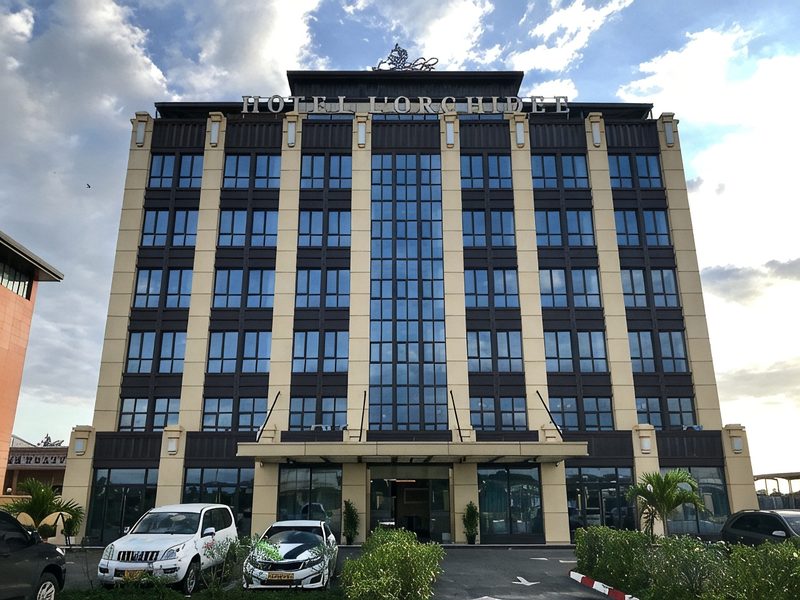
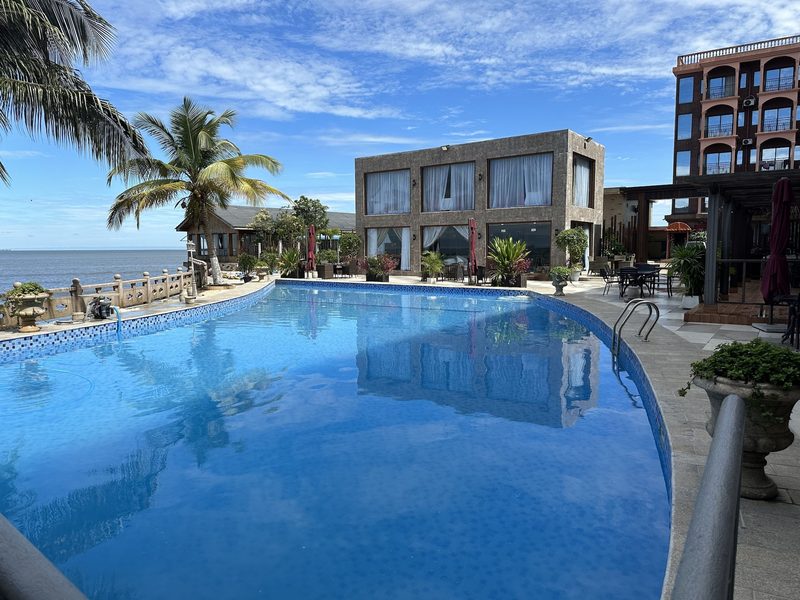
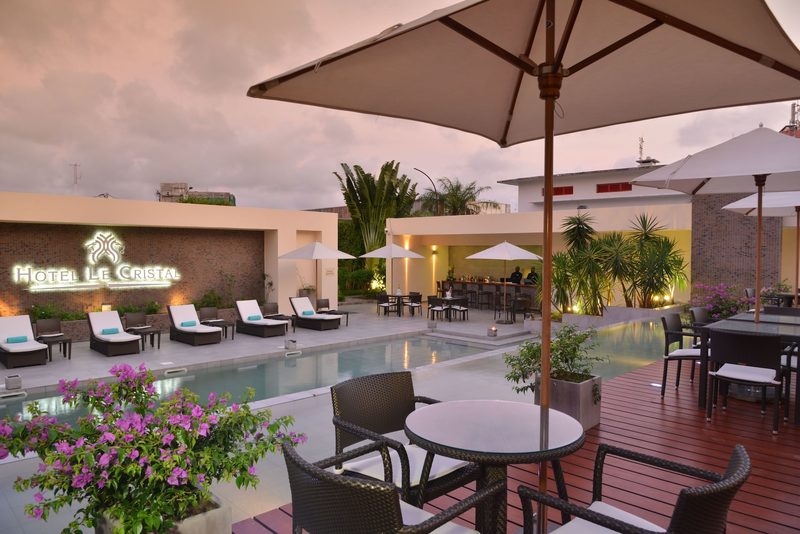
Where to Stay in Libreville in October
Hand-picked hotels across price tiers for October travellers.
Packing Checklist
Bookmark this page — your progress is saved between visits
Need the full list with shopping links?
Climate-specific gear, brand recommendations, and what to leave at home.
View Libreville Packing List →Essential Tips
Insider knowledge and common pitfalls to avoid
Insider Knowledge
Libreville runs on French and CFA francs. ATMs exist downtown and near the waterfront. But they run out of cash unpredictably, over weekends. Carry enough CFA in mixed denominations to cover two full days of expenses at any time. Cards are accepted at some hotels and supermarkets but essentially nowhere else, not at Mont-Bouet, not in taxis, not at the waterfront boat operators. Cash is king.
Taxis in Libreville are shared by default. The driver picks up additional passengers heading the same direction unless you negotiate a course, a private hire, at the start. State your destination and say course clearly before getting in. Otherwise you will find yourself on a 45-minute detour through neighbourhoods you did not plan to visit. Fares are negotiated, not metered. Agree on the price before the car moves. Always.
Poulet nyembwe at the market stalls tastes nothing like the hotel restaurant version. The market women cook it in unrefined red palm oil that gives the sauce a deep, almost fermented earthiness, and they add piri-piri chili at a level that most restaurant kitchens would not dare. Point at the pot. Hold up fingers for how many portions. Eat it with your hands wrapped around baton de manioc. This is how Libreville eats.
October evenings in Libreville cool to around 23°C (74°F), which in the local context feels pleasant after the daytime humidity. The waterfront boulevard comes alive after dark with families, joggers, and grilled-fish vendors whose charcoal smoke drifts across the road. Walk it between 7 and 9 PM for the most atmospheric stretch. Keep to well-lit sections. Avoid unlit side streets.
Avoid These Mistakes
Do not treat October rain as a dealbreaker and stay indoors all day. The storms are intense but rarely last more than a couple of hours, and mornings are frequently clear with dramatic cloud formations. Plan outdoor activities for 6 to 11 AM and again after 4 PM. You will get full days despite the rainfall total. Work with the weather.
Never skip malaria prophylaxis because the trip is short or the city feels urban. Libreville is equatorial and surrounded by standing water in October. Mosquitoes breed in every puddle, gutter, and garden pot. The risk is real. Hotel lobby aesthetics do not matter. Take your pills.
Do not arrive without French. Libreville has not pivoted toward English-speaking tourism. Menus, signage, taxi negotiations, market interactions, museum labels, and park permit paperwork are all in French. Even basic phrases, bonjour, merci, combien, transform how people receive you. Without them, you are navigating blind. Learn something.
Ready to plan your trip to Libreville?
Now that you've got the research covered, here's where to go next.
Explore More Activities in Libreville
Didn't see anything interesting yet?
Browse Viator's full catalog of tours, day trips, food experiences, and private guides in Libreville.
See All Libreville Tours on Viator