Things to Do in Libreville in May
May weather, activities, events & insider tips
Low Season · Budget Friendly
May Weather in Libreville
Long-run averages for May
84°F (29°C)
High Temp
75°F (24°C)
Low Temp
9.7 inches (246 mm)
Rainfall
88%
Humidity
10
Sunny-Day UV
⚠ Heavy afternoon and evening downpours in May regularly flood low-lying roads in neighbourhoods like Glass and parts of Mont-Bouet. Drainage infrastructure has not kept pace with the city. Standing water on streets can reach ankle or calf depth within minutes. Avoid driving through flooded roads. Keep to higher ground during active storms.
⚠ Malaria transmission is at seasonal highs during the wet months. The combination of standing water, warm temperatures, and dense vegetation around Libreville creates ideal mosquito breeding conditions. Prophylaxis, repellent, and treated bed nets are essential. Not advisory. Essential.
⚠ The Gabon Estuary currents run stronger during the rainy season due to increased river flow. Boat crossings to Pointe Denis and Pongara can be rougher than in the dry months. Operators may cancel afternoon crossings if conditions deteriorate. Confirm return transport before departing.
Is May Right for You?
Weigh the advantages and considerations before booking
Advantages
- + May marks the final stretch of Libreville's extended rainy season, just before the dry months of June through September settle in. The downpours are already tapering off compared to March and April, when the city soaks up 14.3 inches (363 mm) and 13.3 inches (338 mm) respectively. You will find saturated, vivid greens across the Mondah forest and the estuary mangroves, that deep equatorial colour that fades and dulls once the harmattan-tinged dry season arrives.
- + Tourist numbers in Libreville stay thin year-round, but May is quiet. The dry-season visitors who arrive for whale watching and turtle nesting have not yet come, and the business-conference crowd tends to gather later in the year. That means shorter waits for pirogue crossings to Pointe Denis, emptier trails at the Arboretum Raponda Walker, and more room to negotiate at Mont-Bouet market without fighting through crowds.
- + Atanga, the oily purple fruit Gabonese cooks roast over coals or simmer into sauces, reaches its rainy-season harvest, and May is typically when the first batches appear at market stalls along Boulevard Triomphal and inside Mont-Bouet. The smell is unmistakable: smoky, slightly resinous, somewhere between avocado and roasted chestnut. Time it right, and you eat atanga the way locals do, hot off a charcoal grill, the skin splitting and the buttery flesh inside still steaming.
- + Accommodation rates in May tend to drop noticeably below what dry-season months command. Libreville ranks among the more expensive cities in Central Africa, so that shoulder-season dip matters. Booking two to three weeks out in May generally secures better rooms than last-minute scrambles in July or August.
Considerations
- − The humidity is relentless. At 88%, the air in Libreville feels like a warm, damp cloth pressed against your skin from the moment you step off the plane at Leon Mba International. Even locals slow down between noon and three in the afternoon. Air conditioning is not optional. It is survival infrastructure, and not every maquis or market stall has it.
- − Rain in May arrives in heavy, concentrated bursts, often in the late afternoon or early evening. When it hits, the streets around Mont-Bouet and the lower-lying parts of Glass neighbourhood flood quickly. Drainage infrastructure in Libreville has not kept pace with the city's growth, so ankle-deep water on the roads is common after a proper downpour, and taxis either slow to a crawl or pull over entirely.
- − May falls outside the prime wildlife windows. The leatherback turtles that nest on the beaches of Pongara National Park arrive from November through February, and the humpback whales that pass through the estuary peak between July and September. You will still spot forest birds, monkeys, and the occasional river dolphin. But the marquee species are elsewhere.
Best Activities in May
Top things to do during your visit
Pointe Denis Beach and Peninsula Excursions
The speedboat crossing from Libreville's waterfront to Pointe Denis takes roughly fifteen to twenty minutes, and in May the estuary water is warm, murky green, and surprisingly calm between storms. The peninsula itself sits on a sandbar between the Atlantic and the Gabon Estuary, and even on weekends the beach stretches remain close to empty this time of year. The sand is coarse and tan, nothing like fine Caribbean powder. But the water is bathtub-warm and the treeline behind the beach provides shade without needing an umbrella. Bring reef-safe sunscreen and a light rain shell: afternoon squalls blow in fast, dump rain for twenty minutes, and vanish, leaving the air cooler and the light golden. The swimming is best in the morning before the wind picks up. May's lower visitor count means you are likely sharing the beach with a handful of Libreville families rather than tour groups.
Booking Tip: Arrange your crossing through a licensed pirogue operator at the waterfront embarcadere near the Marche du Bord de Mer. Boats run most mornings and early afternoons but service thins after 3 PM, in rainy weather. Book your return crossing before you leave the mainland. See current options in the booking section below for organized day trips that bundle the crossing with activities on the peninsula.
Arboretum Raponda Walker Forest Trails
About 20 km (12.4 miles) north of central Libreville near Cap Esterias, the Arboretum Raponda Walker covers what remains of the Mondah classified forest, a chunk of humid equatorial rainforest that has survived inside the expanding city's reach. In May, the forest floor is slick and dark with moisture, the canopy drips steadily even between rainstorms, and the air smells of wet bark, decomposing leaves, and something faintly sweet from the flowering trees overhead. Marked trails run from 500 metres (0.3 miles) to about 4 km (2.5 miles), and one route threads all the way down to the coast. The birding is excellent in the wet season: hornbills, turacos, and grey parrots are more vocal and visible when the canopy is soaked. Wear proper closed-toe shoes with grip. The laterite trails turn into red mud after rain. Mosquitoes are aggressive in the understory, so long sleeves and DEET-based repellent are non-negotiable.
Booking Tip: The arboretum is managed by the National Agency for National Parks and access sometimes requires advance coordination, if you want a guided walk rather than self-navigation. Arrange through a Libreville-based nature tour operator at least a week ahead. A half-day is enough for the main trails. Check the booking section below for guided excursions that include transport from central Libreville.
Mont-Bouet Market Immersion and Gabonese Food Tasting
Mont-Bouet dominates Libreville. It is Gabon's largest market, a large grid of corrugated-roof stalls and open-air counters covering several blocks. The sound assaults you first. Traders shout prices in rapid French and Fang. Machetes thud against plantains. Whole tilapia and capitaine sizzle on charcoal grills. May brings the first atanga of the season. Fruit sellers stack the purple-black fruit in small pyramids beside pineapples and papayas. Head upstairs above the main hall. Women run informal restaurants there. You sit on wooden benches. You eat poulet nyembwe, the national dish. Chicken braises in a thick, rust-coloured sauce made from pounded palm-nut pulp. It is rich, oily, faintly bitter. It comes over sticky white rice or with baton de manioc, dense cassava sticks wrapped in banana leaves. Arrive early. Before 9 AM is ideal. The produce is freshest then. The heat has not yet turned the covered aisles into a sauna. Afternoon rain thins the crowds. It also floods the lower sections.
Booking Tip: Skip the tour if you want. Mont-Bouet does not require one. A French-speaking local guide changes everything, though. The market is not built for tourists. No English signs exist. Guides know which stalls grill the best fish. They know where to find seasonal produce. Book a walking food experience through a licensed local operator. Do this a few days ahead. See current guided options in the booking section below.
Pongara National Park Day Trip
Pongara lies across the Gabon Estuary from Libreville. The boat ride takes about an hour from the waterfront. Few places on earth match this. Equatorial rainforest meets Atlantic beach here in an almost unbroken line. In May, the park runs deep green. Flooding opens mangrove channels to pirogue navigation. The dry season cannot match this access. Birdlife peaks during wet months. African fish eagles hunt the tidal creeks. So do palm-nut vultures and kingfishers. Turtles do not nest in May. The forest trails behind the beach compensate. Red river hogs live there. Several monkey species do too. The insect noise reminds you. This is serious equatorial jungle. The beach stretches long and wild. Driftwood litters the sand. The colour is dull grey-brown. It turns almost black where waves reach. Swimming is possible. Watch the currents. They run stronger during rainy season.
Booking Tip: Day trips to Pongara need a boat. A park-authorized guide helps too. They know trail conditions. They know tidal timing. Book through a Libreville-based eco-tour operator. Do this at least ten days ahead. Boat availability tightens in shoulder season. A full day is the minimum. Half-day trips feel rushed once you factor in the crossing. Check the booking section below for current excursion packages.
Libreville Estuary and Mangrove Boat Tours
The Komo River estuary dwarfs Libreville. It spans several kilometres at the city's waterfront. Mangrove channels branch off both banks. This ranks among Central Africa's most underrated experiences. In May, water levels push deep into mangrove tunnels. Roots arch overhead. The light turns green and dim. The smell hits tidal notes. Salt. Mud. Rotting vegetation. Something briny and alive. River dolphins appear in early morning. The birding along these channels is excellent for waders and raptors. The boat ride itself uses a motorised pirogue. It is loud and bumpy on open estuary. It quiets to near-silence in mangrove corridors. May brings overcast skies. Cooler mornings hover around 24 degrees C (75 degrees F) before sun breaks through. This beats the same trip in glaring dry season.
Booking Tip: Estuary and mangrove excursions leave from the main waterfront. Look near Marche du Bord de Mer. Book through a licensed boat operator. They must have life jackets. They need an experienced pilot who knows tidal patterns. Morning departures work best. Before 8 AM gives optimal wildlife sighting odds. The water is calmest then. Three to four hours hits the sweet spot. See available guided options in the booking section below.
Quartier Glass Heritage Walk and Waterfront Cultural Tour
Glass is Libreville's oldest neighbourhood. Freed slaves from a captured Brazilian slave ship settled here in 1849. They gave the city its name. The streets run narrow. Some remain unpaved. The architecture mixes colonial-era mission buildings with corrugated-iron houses and concrete block structures. Paint fades to sun-bleached pastels. The Protestant mission near the waterfront dates to the mid-nineteenth century. From Glass, walk south along the bord de mer. This seafront promenade displays large Gabonese sculptures. Pass the imposing but closed Presidential Palace. Continue into the cultural district. The Musee National des Arts et Traditions waits there. It holds masks, reliquaries, and carvings from the Fang, Myene, Punu, and Kota peoples. A fifteen-minute taxi ride brings you to Eglise Saint-Michel de Nkembo. This modest brick-and-corrugated-iron church contains thirty-one wooden pillars. Zephyrin Lendogno carved them over a decade. He was born in Lambarene. Each pillar packs biblical scenes into a distinctly Gabonese sculptural style. In May, overcast light and cooler mornings make walking between these sites bearable. Dry season's direct equatorial sun does not.
Booking Tip: Walk Glass and the waterfront alone if you prefer. A local cultural guide adds history you would otherwise miss entirely. The Musee National keeps irregular hours. Confirm opening times through your accommodation before heading over. Allow a full morning or afternoon. Check the booking section below for guided cultural tours. These cover multiple sites with transport included.
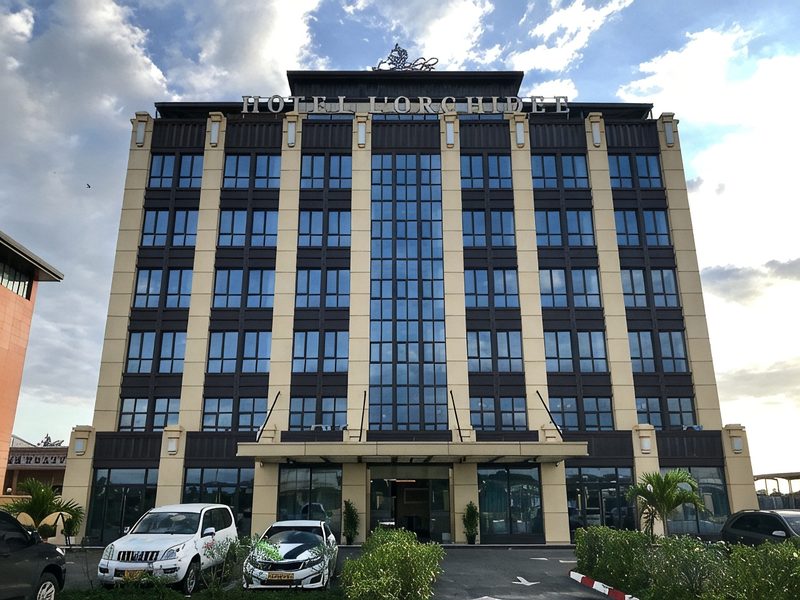
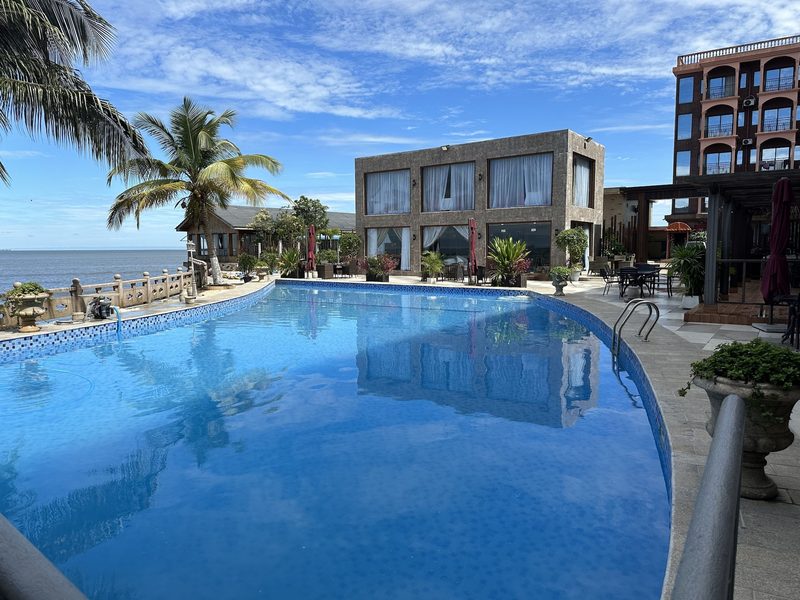
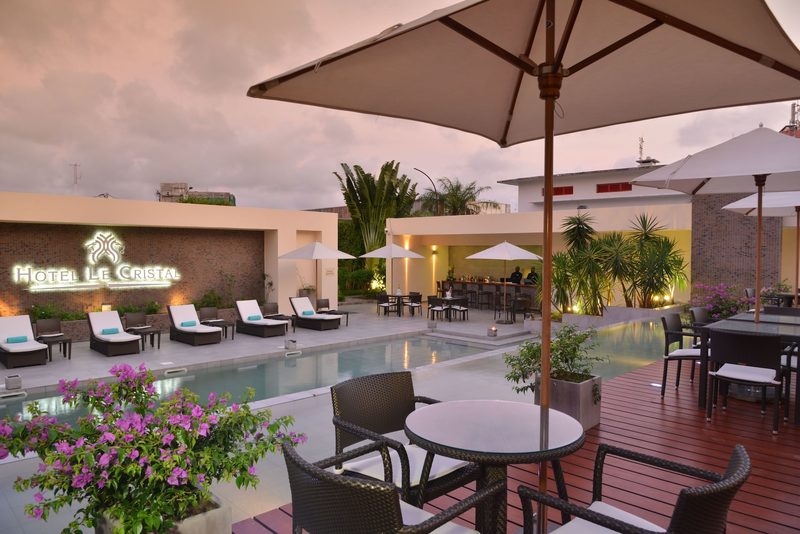
Where to Stay in Libreville in May
Hand-picked hotels across price tiers for May travellers.
Public Holidays in May
Dates that affect opening hours, transport and crowds
Labour Day
Observed nationwide as a public holiday.
Martyr's Day
Observed nationwide as a public holiday.
Whit Monday
Observed nationwide as a public holiday.
Labour Day
Observed nationwide as a public holiday.
Martyr's Day
Observed nationwide as a public holiday.
Packing Checklist
Bookmark this page — your progress is saved between visits
Need the full list with shopping links?
Climate-specific gear, brand recommendations, and what to leave at home.
View Libreville Packing List →Essential Tips
Insider knowledge and common pitfalls to avoid
Insider Knowledge
Negotiate your taxi fare before getting in. Insist on course exclusive. This means the driver takes only you. Shared taxis cost less. They also pick up and drop off other passengers. A fifteen-minute ride becomes forty-five. If the fare feels high, say non merci. Walk toward the next cab. More always wait. The routes between Batterie IV, the waterfront, and Mont-Bouet are common tourist runs. Drivers on these routes know the going rate. Use that knowledge.
The maquis deliver the best food. These informal open-air restaurants scatter across every Libreville neighbourhood. Look for smoke rising from the grill. Look for Gabonese families eating. Avoid places with printed menus aimed at foreigners. Poulet nyembwe tastes different at a proper maquis. The palm-nut sauce runs thicker, oilier, more pungent. The chicken braises until it falls apart. Cannot read the board? Point at what the next table is eating. It works.
May 1st empties Libreville. Banks close. Government offices close. Most shops close. Many restaurants close for Fete du Travail. Arriving on or around May 1st? Stock up on cash from an ATM beforehand. Confirm with your hotel that their restaurant will open. The upside is real. The parade on Boulevard Triomphal impresses. It is one of the few times you see Libreville's civic life on full display. Worth planning around.
Libreville's electricity supply fails often. Outages strike several times a week. Some last hours. Better hotels and guesthouses have backup generators. Confirm this when you book. Bring a portable power bank for your phone. Bring a small flashlight. Relying on air conditioning to sleep? In May's humidity, you will be. A room without generator backup means a miserable night. Check before you pay.
Avoid These Mistakes
Libreville costs more than you expect. It ranks among Africa's priciest cities. The oil economy drives this. Most food and goods arrive imported. Budget travelers accustomed to West African pricing will be caught off guard. Accommodation costs more. Restaurant meals cost more. Transport costs more. Neighbouring capitals like Yaounde or Douala look cheap by comparison. Plan accordingly.
Avoid outdoor activities in early afternoon. Between noon and 3 PM, 29 degrees C (84 degrees F) heat combines with 88% humidity. The result is physically draining. Even people used to tropical climates struggle. Locals rest during these hours. Schedule market visits, forest hikes, and boat trips for the morning. Aim to finish before 10 AM. Save indoor activities for midday. The Musee National works. Eglise Saint-Michel de Nkembo works. The worst heat passes. Then head back outside.
Skipping malaria prophylaxis because Libreville feels like a modern city. It is a modern city, with shopping centres, decent roads, and international hotels. But it is also on the equator in a high-transmission malaria zone, surrounded by mangroves and standing water. May's rains make it worse. The mosquitoes that carry it look exactly like the ones that do not. Take your antimalarials. Sleep under a treated net if your room lacks proper screens. Use repellent at dusk without exception.
Ready to plan your trip to Libreville?
Now that you've got the research covered, here's where to go next.
Explore More Activities in Libreville
Didn't see anything interesting yet?
Browse Viator's full catalog of tours, day trips, food experiences, and private guides in Libreville.
See All Libreville Tours on Viator